
There is a lot of noise around AI in manufacturing right now, especially around whether it will replace people. I think manufacturers should be asking a different question: How can we use AI and automation to help the people we already have accomplish more?
That question becomes especially important when you look at the workforce challenges manufacturers are facing. Skilled workers are difficult to find, experienced employees are getting harder to replace and many manufacturers are asking the people they have to wear multiple hats. When you cannot find another machinist, engineer, estimator, salesperson or maintenance professional, adding more work to the people already on your team is not a sustainable growth strategy.
But before you assume you need another person, it is worth looking at how much capacity is already being consumed by the way work gets done.
This is where my Lean Six Sigma experience changes the way I look at AI. I don’t start with the technology. I start with the process. Where is the waste? Where are people spending time searching for information, entering the same data into multiple systems, chasing down missing information, answering repetitive questions, documenting work or fixing problems that could have been prevented?
Those activities may be necessary, but that doesn’t mean they all require a highly skilled person to perform them.
Your best machinist should be spending time applying years of experience to difficult manufacturing problems, not searching through manuals for information that could be easier to find. Your estimator should be evaluating complex RFQs and determining whether a job is a good fit, not spending hours manually gathering information that already exists somewhere in your systems. Your salespeople should be building relationships and helping customers solve problems instead of spending a large portion of their day updating spreadsheets and tracking down basic information.
This is where AI can become a capacity multiplier.
AI can help review RFQs for missing information, organize tribal knowledge, make information buried in manuals and documents easier to access, summarize customer history, identify patterns in quality data and reduce repetitive work in quoting, scheduling, documentation and follow-up. When you combine that with automation, the possibilities become even more interesting.
And I don’t mean AI working by itself in some futuristic manufacturing environment. Think about AI integrated with the systems and equipment you already use, including robots and cobots.
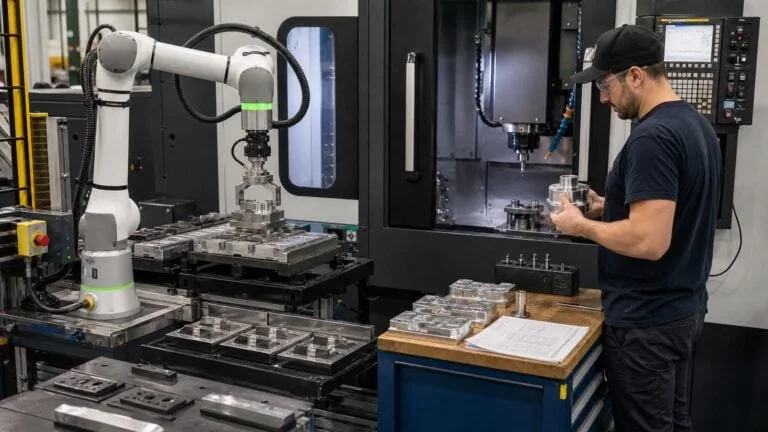
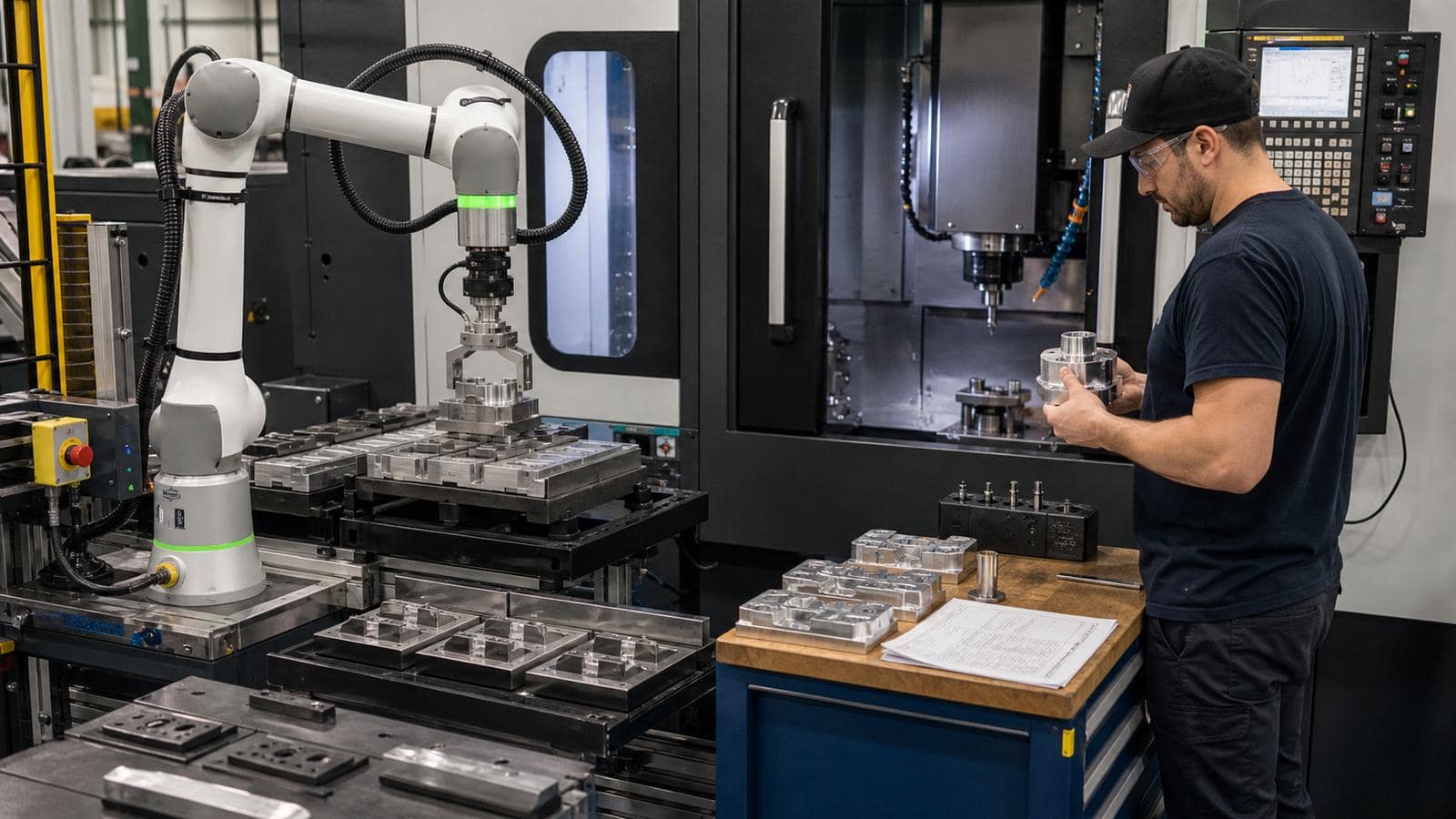
A cobot might handle repetitive machine tending or material movement while your skilled employee focuses on setup, troubleshooting, quality and the decisions that require experience. AI can potentially help determine what information that employee needs, identify patterns in production data or trigger the next step in a workflow. Your ERP, CRM, quality systems and other software can become part of that same flow instead of creating islands of information that employees have to navigate manually.
That is much different from simply buying a robot or subscribing to an AI tool and hoping it makes the business more efficient. The technology is only as valuable as the process surrounding it.
If you automate a bad process, you can simply create bad results faster. If your information is inconsistent, AI will not magically make it accurate. If your employees are constantly working around broken handoffs, adding another piece of technology may give them one more thing to manage.
This is why I believe manufacturers need to think about workflow engineering rather than simply AI adoption. Start by understanding the current state of the process. Identify the waste, bottlenecks, unnecessary handoffs, duplication and rework. Determine what actually requires human judgment and what does not. Then decide where AI, automation, robotics, cobots, software integration or even a simple process change can eliminate friction.
Sometimes the answer will be AI. Sometimes it will be a robot or cobot. Sometimes it will be better use of an ERP system you already own. Sometimes it will be eliminating a step that never needed to exist in the first place.
The goal is not to turn one employee into three people. The goal is to give one good employee the capacity of three people by removing the work that does not require their expertise.
For a $10 million manufacturer trying to grow without adding layers of overhead, that can make a significant difference. Creating even a few additional hours of productive capacity each week across several employees can create room for more quotes, more customers, more process improvement, more sales activity or more time solving the problems that actually move the business forward.
And there is an important distinction here. Capacity does not mean manufacturers should never hire. If you have eliminated waste, improved your processes and automated what makes sense and you still don’t have enough people to meet demand, then you probably do need to hire. Technology should not be used as an excuse to overload good employees. The opportunity is to make the people you do have more valuable and give them better tools to do their jobs.
That is where AI gets interesting to me. Not as a replacement for skilled workers, but as one piece of a larger system that combines people, process and technology. When you use Lean thinking to improve the process and then bring in AI, automation, robotics and cobots where they actually make sense, you can create capacity without simply throwing more people at the problem.
In a manufacturing environment where skilled workers are in short supply, that is a very different way to think about growth. The question isn’t simply, “Where can we use AI?” The better question is, “Where are we wasting the valuable skills of the people we already have, and how can we redesign the workflow so those people can spend more of their time creating value?”