
Everyone is talking about AI. Very few are talking about AI supply chains. And that’s where the real risk is. When companies like Anthropic and OpenAI announce major funding rounds, partnerships, and infrastructure expansion, most headlines focus on valuation, model performance, or who’s winning the AI race. I’m looking at something else: concentration risk, infrastructure dependency, and strategic control.
Because if you’re in manufacturing, distribution, or industrial B2B, you’ve already lived this story.
Remember when:
- A single overseas supplier shut down production lines?
- A resin shortage stalled entire industries?
- Lead times went from 6 weeks to 52?
- Chips became the bottleneck for everything from automotive to industrial controls?
We learned the hard way that supply chain fragility isn’t theoretical. It’s operational. It’s financial. It’s existential. Now apply that same lens to AI.
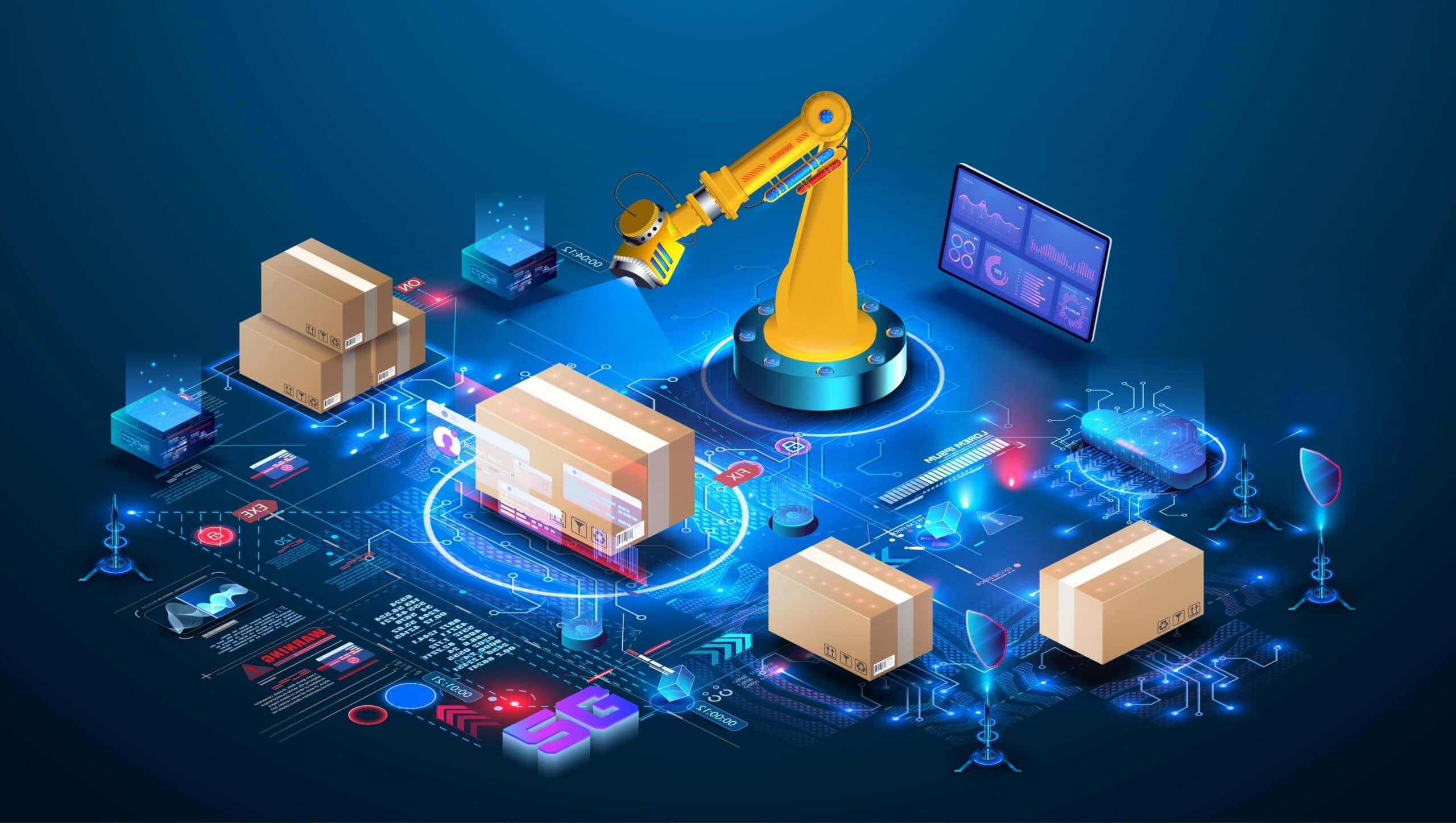
AI Has a Supply Chain, Too
The AI ecosystem depends on:
- Advanced semiconductor manufacturers
- Massive data center capacity
- Hyperscale cloud providers
- Energy infrastructure
- Specialized talent pools
When OpenAI expands data center footprints and Anthropic deepens cloud partnerships, they are not just scaling software. They are scaling physical, capital-intensive infrastructure. That infrastructure is concentrated: in a handful of chip manufacturers, a handful of cloud providers, and a handful of regions. Sound familiar?
If your marketing automation, quoting systems, forecasting models, CRM workflows, or AI copilots are built on top of these platforms, your digital operations are now dependent on that upstream ecosystem. That’s a supply chain.
What This Means for Manufacturing Leaders
As a Lean Six Sigma growth strategist, I don’t look at AI as a shiny object. I look at it as a process variable.
- Where does it touch revenue?
- Where does it introduce risk?
- Where does it remove waste?
- Where does it create dependency?
In manufacturing, we map value streams. We identify single points of failure. We reduce variation. We build redundancy where it matters. We need to apply that same operational thinking to AI adoption. Because here’s the uncomfortable truth: If your marketing, sales, or operations strategy is now “ AI will fix it,” but you haven’t defined process, ownership, data integrity, or contingency plans, you’ve just added complexity to an unstable system.
That’s not innovation. That’s unmanaged risk.
Funding and Expansion Are Signals
OpenAI’s capital raises and Anthropic’s growth aren’t just business news. They are signals:
- AI infrastructure is becoming as strategic as energy.
- Governments and enterprise players see it as national and economic leverage.
- The barrier to entry is rising.
- Consolidation risk is real.
In B2B manufacturing, we understand what happens when power consolidates upstream. Pricing power shifts. Access tightens. Negotiation leverage changes. If your business model depends heavily on one AI ecosystem, you need to think like a supply chain strategist, not a software user.
The Strategic Questions You Should Be Asking
Instead of asking: “Which AI tool should we use?” Ask:
- Where does AI sit in our value stream?
- What happens if access changes?
- Are we over-reliant on a single provider?
- Do we own our data?
- Have we defined measurable outcomes before automating?
Buyers don’t expect perfection. They expect responsiveness. The same is true internally. Your team doesn’t need every AI tool. They need clarity, structure, and alignment. AI layered onto broken processes just accelerates chaos. AI layered onto disciplined strategy accelerates growth.
I’ve worked with manufacturers who chased digital trends without strategy. I’ve also worked with companies that used data, process mapping, and cross-functional alignment to turn complexity into margin.
The difference was never the tool. It was leadership willing to look at the truth early and invest in the right foundation. AI is not exempt from that rule. Anthropic and OpenAI’s expansion is not something to fear. But ignoring the infrastructure, concentration, and dependency implications? That’s when “that’s how we’ve always done it” quietly becomes “we didn’t see that coming.”
If you’re integrating AI into your marketing, sales, or operations strategy, treat it like what it is: a critical supplier. And manage it accordingly.