

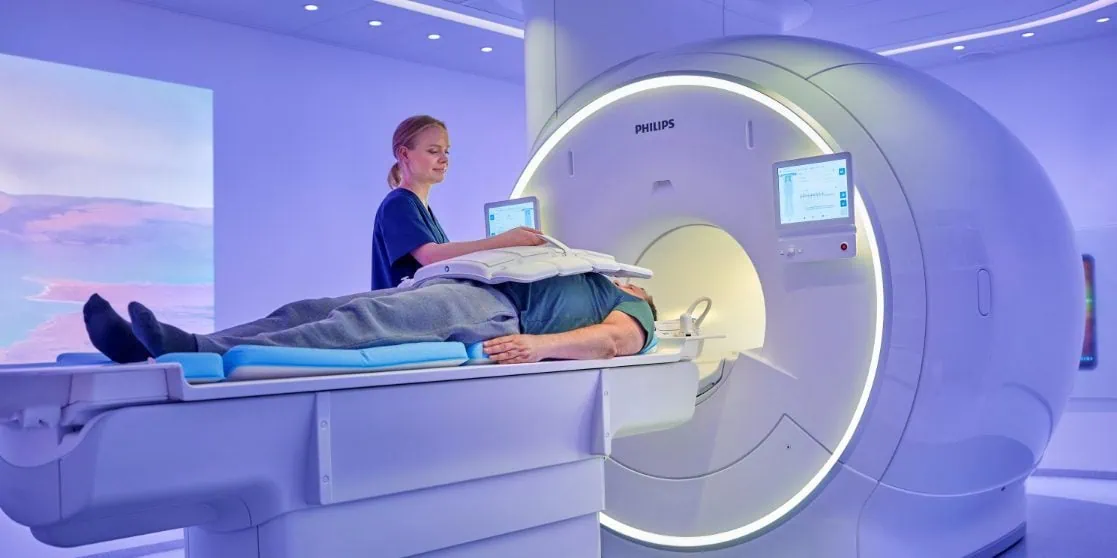
Last week, I wrote about “The CT Scan You Didn’t Want,” a story that began with two weeks of not feeling well, a trip to the emergency room, and a CT scan that uncovered something I hoped not to hear.
At the time, I was waiting for answers. This week, I am still waiting.
The concerns raised by the CT scan led to a stat MRI this morning, and I now have a surgical consultation on the horizon. While I am trying not to get ahead of myself, it is impossible not to think about what the results may reveal. I am praying that what they find is not what we currently suspect, but until the results come back, all I can do is wait.
As anyone who has been through a serious medical situation knows, the CT scan is rarely the end of the process. It is simply the first indication that something requires a closer look. The MRI is ordered because the doctors need more information before they can determine the severity of the problem, the available options, and the best course of treatment.
As I was laying there in the machine for 50 minutes this morning, it struck me that manufacturers often find themselves in the exact same position.
Many companies finally reach the point where they recognize that something is not quite right. Revenue growth has slowed. Margins are getting squeezed. Customer acquisition has become more difficult. Long-time customers are buying less, and new opportunities are taking longer to close. Sometimes the signs are subtle, and sometimes they are impossible to ignore, but eventually leadership realizes they need answers.
That first assessment, whether it is a sales and marketing audit, a Voice-of-Customer project, competitive research, customer concentration analysis, or a review of their overall growth strategy, is often the business equivalent of the CT scan. It identifies symptoms and highlights areas of concern.
What it does not always do is explain the full extent of the problem. That requires digging deeper.
Unfortunately, this is where many organizations stop. They gather information, discover a few uncomfortable truths, and then hesitate to continue because they are afraid of what additional investigation might uncover or the work and resources necessary.
I understand that feeling better than I would like to right now.
The reality is that more information can be unsettling. In business, just as in healthcare, there are times when you would rather not hear the answer. It is much easier to operate under assumptions than it is to confront facts that may require difficult decisions.
Yet, avoiding the MRI does not make the problem disappear.
A manufacturer may discover that 60% of its revenue comes from just a handful of customers. A sales assessment may reveal that opportunities are being lost for reasons leadership never considered. Voice-of-Customer interviews may uncover frustrations or opportunities that customers have never shared directly. Competitive research may expose weaknesses that competitors have been quietly exploiting for years.
None of those findings are enjoyable. However, they are all valuable.
You cannot create an effective treatment plan until you understand the problem. Likewise, you cannot develop a successful growth strategy until you understand what is actually preventing growth.
One of the lessons Lean Six Sigma teaches is that symptoms and root causes are rarely the same thing. We can spend months reacting to the visible symptoms of a problem while never addressing the underlying issue that is creating them. The purpose of investigation is not to confirm what we already believe. The purpose is to uncover the truth so that meaningful improvement becomes possible.
That is why the companies that achieve the greatest long-term success are often the ones willing to ask difficult questions and listen carefully to the answers, even when those answers are uncomfortable.
As I wait for my MRI results and prepare for the next conversation with my medical team, I am reminded that clarity is often uncomfortable before it becomes useful. The uncertainty is difficult, but making decisions without the necessary information would be far worse.
The same is true in business.