
My Great-Grandmother came to the U.S. from Ukraine just after 1900. She brought little with her, except her family recipes in her head and her language.
She taught my Grandma how to cook them from memory. No measurements. No recipe cards. Just instinct, taste, and tradition. But since no one wrote them down. When Grandma passed, so did those recipes.
A few years ago, my Mom decided to bring them back to life. Through trial and error, and decades of watching and tasting, she recreated Grandma’s borscht. The first spoonful tasted exactly like the one from my childhood.
I promised myself I wouldn’t make the same mistake.
Now, when my mom cooks traditional recipes, I ask her to write them down. I never made borscht myself. The thought of boiling, skinning, and grating beets intimidated me. I told myself I could never make it taste like Grandma’s or Mom’s.
Then my mom had an accident and couldn’t cook for a while. Around the same time, someone gave me a lot of beets. So I decided to try.
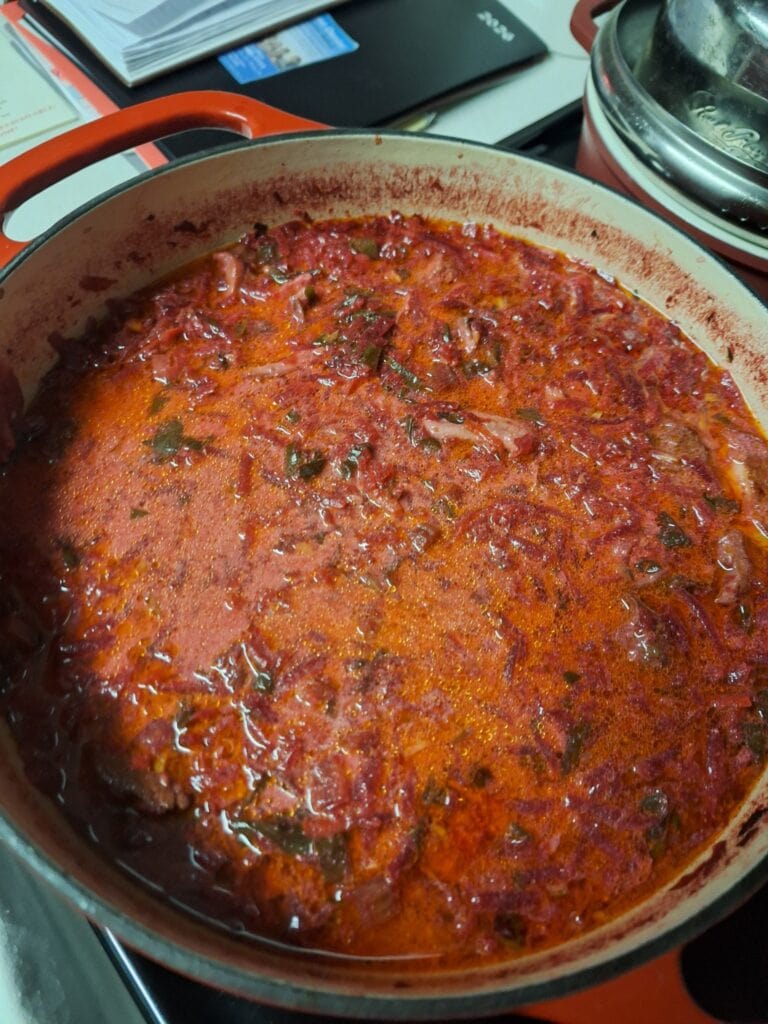
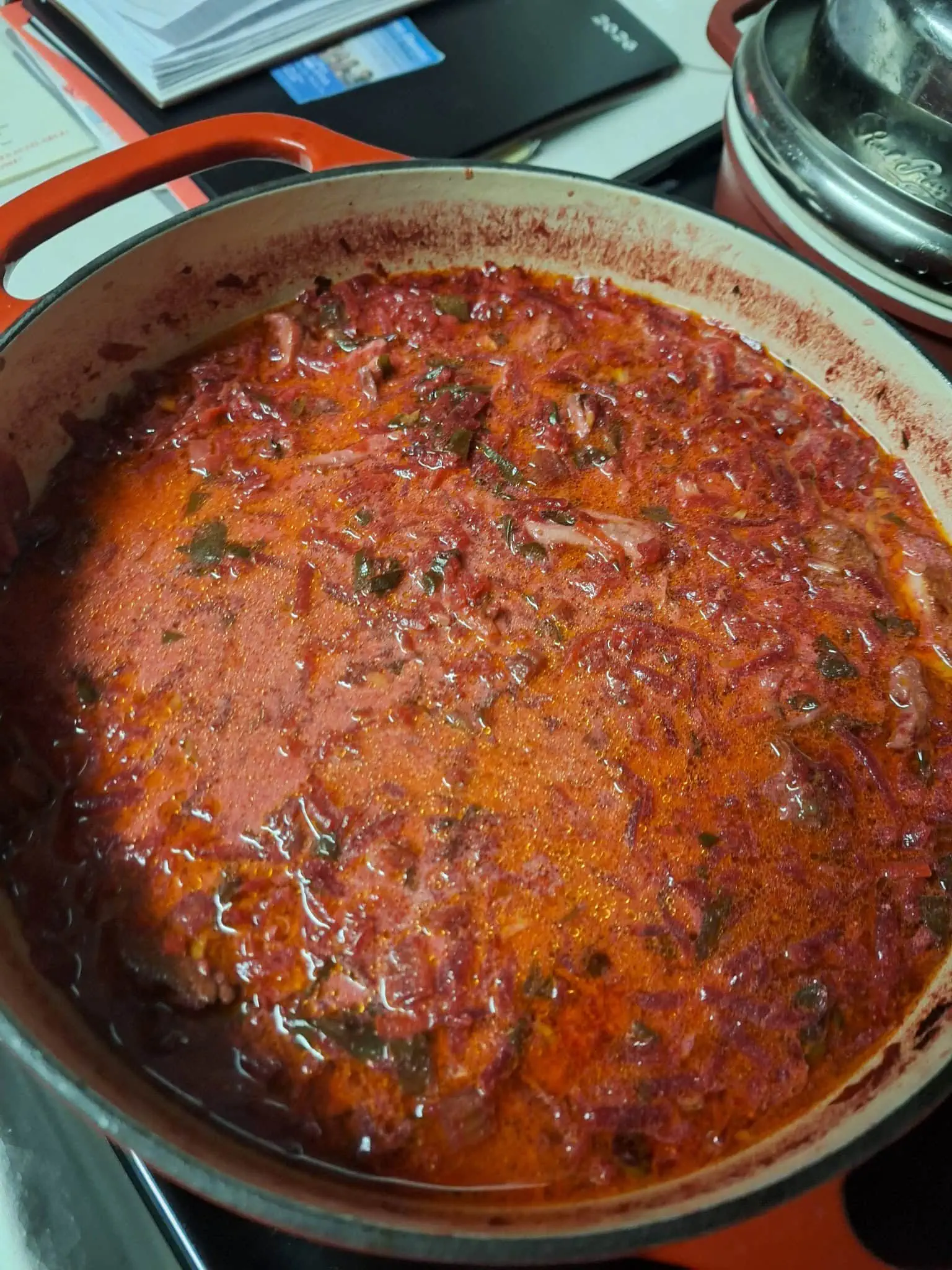
Four hours later, I had my first pot of borscht. And you know what? It tasted just like theirs.
It wasn’t just delicious; it was deeply satisfying. It reminded me that some things are worth the effort and that I can achieve anything I set my mind to.
The Connection Between Cooking and Manufacturing
Cooking, at its core, is a kind of manufacturing.
You start with raw materials.
You follow a process.
You rely on experience, intuition, and timing.
You adjust as you go.
And in the end, you deliver something of value. Something people depend on.
Here are a few lessons I took from that pot of borscht that manufacturers can apply to their own operations:
- Document your process before it’s lost.
My family lost a generation’s worth of recipes because no one thought to write them down. Manufacturers do the same when they rely on “tribal knowledge.” If your best machinist or sales person retires tomorrow, what critical know-how goes out the door with them? - Don’t let intimidation stop innovation.
I avoided making borscht because I was afraid I couldn’t do it perfectly. Manufacturers sometimes avoid new technologies or processes for the same reason. But trying, failing, and adjusting is how you master anything, in the kitchen or on the shop floor. - Respect the process, and improve it.
It took me four hours to make that soup. Next time, I’ll find small efficiencies, but I won’t cut corners that affect quality. The same mindset applies to lean manufacturing and process improvement. - Quality isn’t fast; it’s intentional.
You can’t rush great soup or great production. Both take patience, precision, and care. - Preserve your culture.
Just as recipes tell family stories, your company’s processes tell your story of craftsmanship, care, and pride. Passing that on is part of your legacy.
From the Kitchen to the Factory Floor
At Barracuda B2B Marketing, I help small- to mid-sized manufacturers document, modernize, and scale what makes them special without losing the human touch that built their reputation.
Just like I did with my family recipes, I:
- Capture your “secret sauce.” I uncover and document what truly sets your company apart — your processes, customer approach, and brand story — so it’s repeatable, scalable, and marketable.
- Bridge sales, marketing, and operations. I align people, processes, and technology so everyone is working toward the same measurable goals.
- Drive efficiency and performance. Using Lean Six Sigma principles, data, automation, and AI, I help you simplify systems, eliminate waste, and make decisions based on facts not assumptions.
- Preserve culture while modernizing. Growth and change don’t have to erode your values. I help companies modernize while keeping their craftsmanship, pride, and people at the core.
Because whether it’s a pot of borscht or a precision-machined part, quality doesn’t happen by accident. It’s built one intentional step at a time on a strongly laid foundation.
Your Turn
What’s your “family recipe” in your business — the thing you know works but haven’t written down or shared? What could you start documenting today? And for a little fun, what is YOUR favorite family recipe?