
In manufacturing, overhead costs can silently erode profit margins if left unchecked. While major operational expenses like raw materials and heavy machinery get regular scrutiny, secondary service contracts, such as uniforms and linen management, frequently fly under the radar.
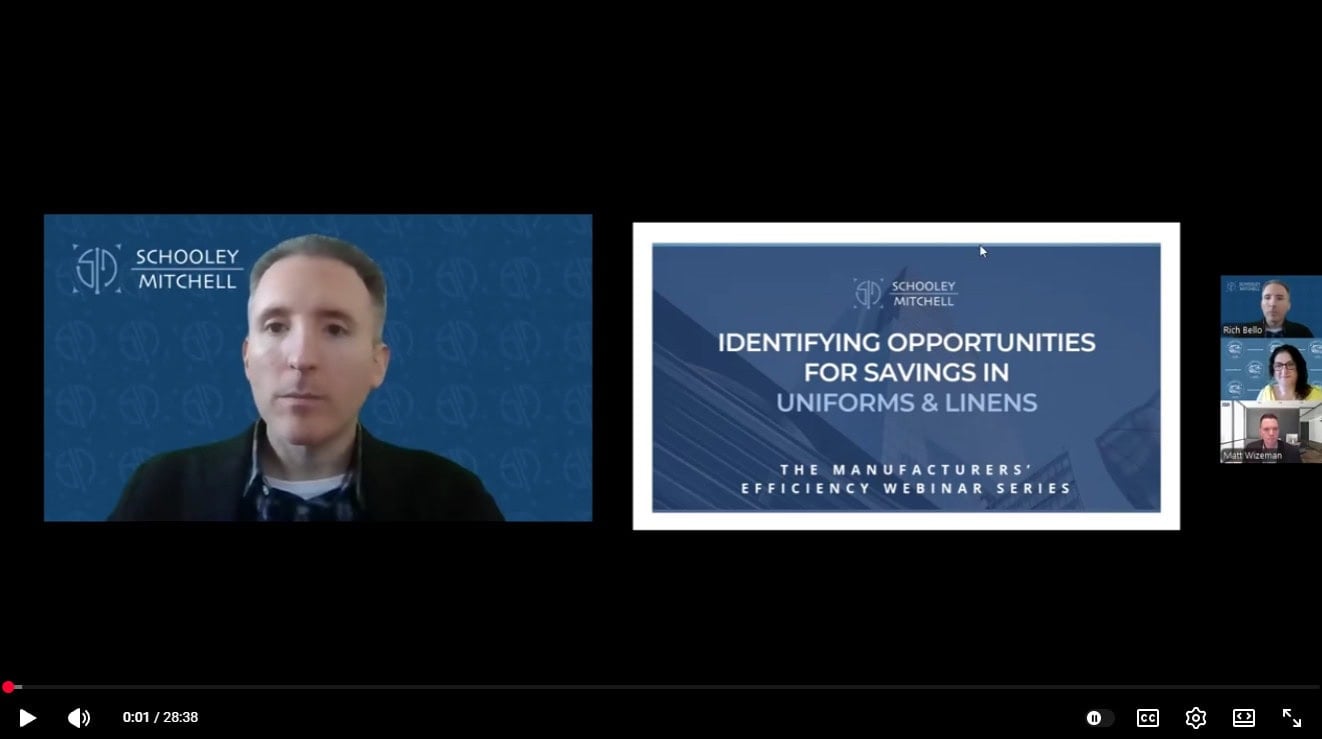
In this week’s installment of the Manufacturers’ Efficiency Webinar Series, Rich Bello from Schooley Mitchell broke down actionable strategies for auditing, managing, and reducing these ongoing expenses without compromising operational standards.
The Hidden Costs of Uniform and Linen Contracts
Uniform and linen delivery services seem straightforward on paper, but vendor billing structures are notoriously complex. Over time, small service adjustments, fluctuating fees, and automatic contract renewals can lead to significant cost creep.
To maintain tight control over these vendor relationships, manufacturers must evaluate their accounts across three core pillars:
- Price Structure: Are you paying market rate, or have subtle price increases stacked up over multi-year agreements? Are auto-renewals locking you into outdated pricing?
- Frequency and Volume: Are delivery schedules and garment inventory levels aligned with your actual headcount and usage, or are you paying for unneeded safety stock and unnecessary stop fees?
- Quality and Compliance: Is the vendor meeting their service level agreements (SLAs) regarding damage replacements, garment hygienic standards, and prompt repairs?
Key Takeaways from Rich Bello
During the webinar, Rich Bello highlighted that cost optimization is not simply about demanding lower rates; it is about demanding accuracy and alignment.
- Audit the Fine Print: Uncover hidden add-on charges such as fuel surcharges, environmental fees, inventory replacement fees, and prep charges that were not prominent in the original proposal.
- Align Deliveries with Actual Demand: Fluctuating shift sizes and seasonal hiring mean your linen and uniform needs change. Ensure your contract allows for flexible inventory adjustments rather than fixed minimums.
- Benchmark Against Industry Standards: Knowing what comparable manufacturing facilities pay in your region gives you the leverage needed to negotiate better terms or hold vendors accountable during contract reviews.
Streamlining Your Operational Efficiency
Managing vendor relationships effectively requires constant monitoring. By routinely reviewing uniform and linen expenses through the lens of frequency, quality, and price, plant managers and operational leaders can eliminate waste and redirect critical capital back into core production.